Secured vs unsecured personal loans in Australia
Security is not a feeling of safety. On an Australian personal loan it is a legal right over an asset — often a car or a term deposit — and it is why the cheaper-looking rate can be the riskier contract.
Published 5 February 2026 · Updated 16 October 2026 · 9 min read
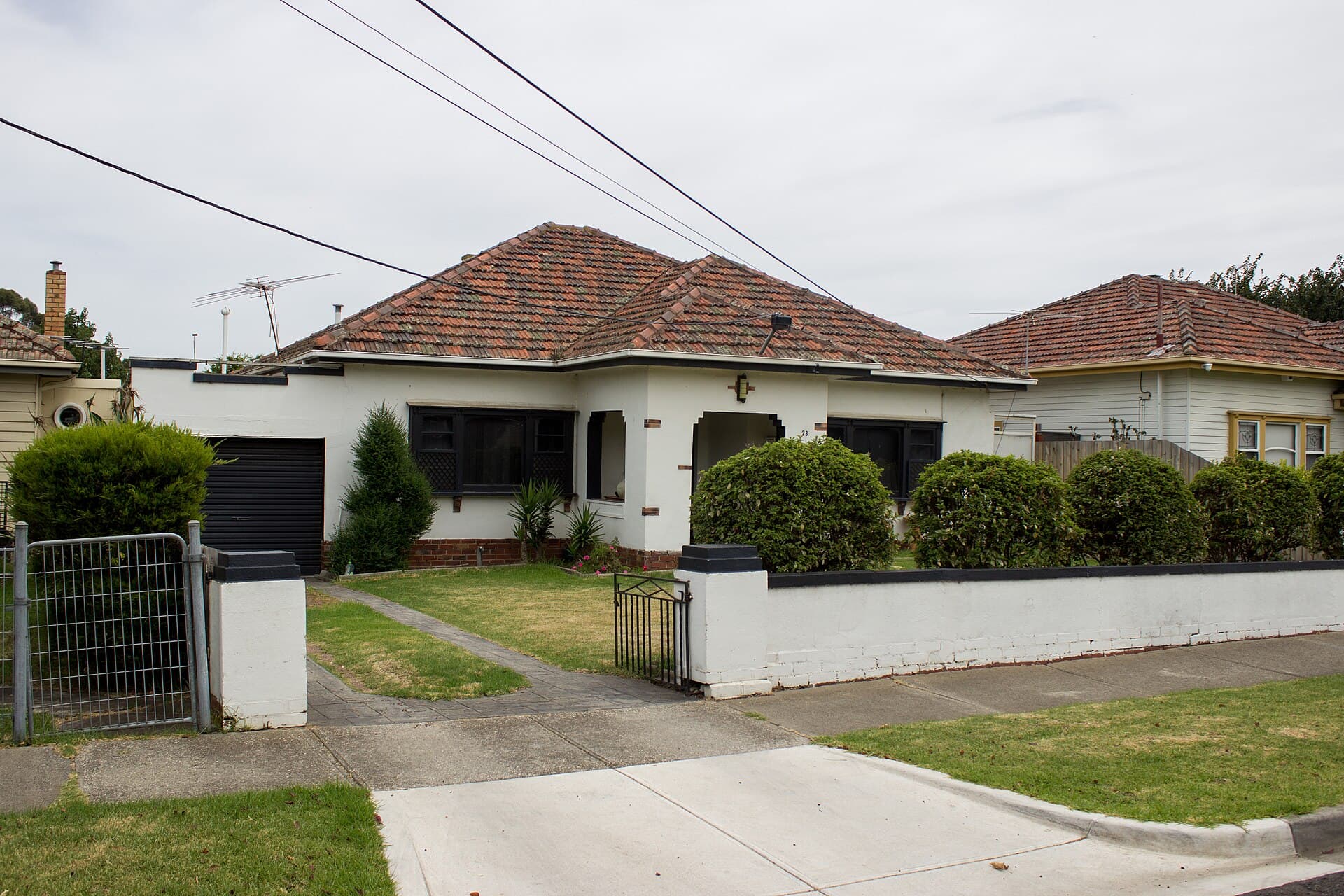
Photo: Philip Mallis. CC BY-SA 2.0. Source. See all image credits.

“Secured” sounds like a compliment. On a credit contract it is a description of who can take what. An unsecured personal loan is a promise to pay. A secured personal loan is a promise to pay and a right over a nominated asset if you do not.
A weatherboard house on a suburban street — Sunshine, Lalor, South Morang — is the sort of picture people attach to “security”. Most personal loans are not mortgages. The asset is more often a car, a term deposit, or another good the lender is willing to take a security interest in. The house picture still helps: something you care about is standing behind the debt.
This is general information about how those two structures differ in Australia, not a recommendation to choose either. ASIC’s personal loans explainer and the National Credit Code are the public documents underneath the brochure.
What does security mean on an Australian personal loan?
Security is a legal interest in property that a credit provider can enforce if the contract is in default. In consumer credit it is usually created by the credit contract and related security documents, and it may be registered so that other lenders can see it.
Common forms on personal lending:
- A motor vehicle — new or used, often the same car the loan is paying for. This is the everyday “car loan” shape, whether or not the product is branded that way.
- A term deposit or savings account — sometimes called a deposit-secured or “secured by funds” loan. The money stays in an account the lender controls or can freeze.
- Other goods — less common on a vanilla personal loan, more common on older-style consumer mortgages over household goods, which Australian law has tightened over the years.
The security is not a vibe. It will be named. The contract should identify the asset, the amount secured, and what happens on default. If you cannot find those clauses, you do not yet know which product you are looking at. How to read a credit contract is the habit; the security schedule is the page people skip.
Unsecured lending still has teeth. A lender can issue default notices, list a default on your credit file, and take court action. What it cannot do, without a security interest, is walk up to a particular car and treat it as theirs.
What can a lender take if a secured loan goes unpaid?
If the loan is in default and the contract allows it, the lender may enforce the security. For a car that can mean taking possession and selling it. For a term deposit it can mean applying the deposit to the debt. The National Credit Code sets rules about notices, enforcement and, in some cases, hardship variations before the situation becomes a repossession file.
Enforcement is not instant on the first late debit. It is also not a myth. After the required notices, a secured car can be collected. Sale costs come off the proceeds. If the car sells for less than the payout figure — a common outcome on a depreciating used vehicle — the shortfall can remain owing as an unsecured residue. Losing the car does not always end the debt.
That is the risk the cheaper rate is pricing. Repossession is not the only consequence. A default listing and a court judgment can still follow. Hardship help, asked for early, is the conversation the Code expects credit providers to consider. How to ask a lender for hardship help is the practical path; waiting until the tow truck is booked is not.
None of this is a prediction about your loan. It is the shape of the product.
Why do secured personal loans advertise cheaper rates?
Because the lender’s expected loss is lower if they can sell an asset. Interest is, among other things, a price for the chance they will not be paid. Security shrinks that chance. The billboard shrinks the rate.
Three caveats sit under that neat sentence.
The asset has to be acceptable. A ten-year-old car with an existing finance payout, a written-off history, or a value well below the loan amount may not qualify — or may qualify only for a smaller advance. The cheap “secured” rate you saw may assume a late-model vehicle the lender can insure and sell.
You may be borrowing against something you already own. A deposit-secured loan can look almost like borrowing your own money back, with a margin. That can be rational if you would otherwise break a term deposit and lose interest. It can also be an expensive way to keep a deposit intact while creating a second product you must service.
The comparison is incomplete if you ignore default. A lower rate on a secured car loan is not “saving” you money if the alternative was not borrowing, or if the unsecured option would have been smaller. Cheap interest on a loan that puts the household’s only car at risk is a different calculation from cheap interest on a holiday.
When you compare personal loans, put the security column next to the rate column. A two-percentage-point gap is not a bargain until you know what stands behind it.
What is an unsecured personal loan and when is it used?
An unsecured personal loan has no nominated asset. Approval rests on income, expenses, existing debts and the credit file. Pricing is usually higher. Flexibility is the advertised trade: you can sell the car, move house, or close a savings account without asking the personal-loan lender for a release of security.
Typical uses — described, not recommended — include consolidating several smaller debts, paying a one-off expense that has no resale value (a medical bill, a relocation, a course), or borrowing when the only car is already financed or not worth offering.
Flexibility has a cost that is not only the rate:
- Higher interest and, sometimes, stricter cut-off scores.
- The same responsible-lending assessment of whether the contract is not unsuitable. Unsecured does not mean unexamined. See what responsible lending means for borrowers.
- Enforcement through the file and the courts rather than through a windscreen. That is slower. It is not toothless.
Unsecured personal loans are also easier to confuse with credit cards and buy now pay later, which are likewise usually unsecured. Those products have different terms, different default clocks and different reporting. Personal loans versus credit cards versus BNPL is the comparison across product families.
Can a term deposit be used as security?
Some Australian credit unions, mutuals and banks will lend against a term deposit in the same group. The deposit is frozen or charged. The loan rate sits above the deposit rate. You are paying a margin for access to cash without breaking the term.
Questions that belong on the pad before anyone is impressed by the “secured rate”:
- Whose name is on the deposit, and do all owners have to consent?
- What happens at deposit maturity — is the security rolled, released, or automatically re-term deposited?
- Can the lender take the deposit on a single missed loan repayment, or only after default notices?
- Is the loan amount limited to a percentage of the deposit, and what fees apply to set the charge up?
This structure can look conservative. It still creates a credit contract, an enquiry and a repayment. It can still appear on a credit report. It is not “using your own money for free”.
A house is a different legal world — mortgages, caveats, different enforcement rules, different comparison-rate examples. Do not take a personal-loan security explanation and apply it to a home loan, or the reverse.
Secured versus unsecured: what actually changes besides the rate?
A compact list, useful when two products are open in adjacent tabs:
- Advertised rate — often lower when secured; often higher when unsecured.
- What the lender can take — the named asset, then any shortfall, versus no particular asset (the debt still remains).
- Extra documents — ownership, valuation, insurance and PPSR checks on vehicles, versus income and expense evidence alone.
- Flexibility to sell the asset — usually needs lender consent and a payout when it is security; not tied to a particular good when the loan is unsecured.
- Approval hurdle — asset quality plus borrower quality, versus borrower quality only.
“Often” is doing work in that list. A poorly documented secured application can be slower than a clean unsecured one. A high-risk unsecured loan can be declined where a modest car-secured loan would not. How to apply for a personal loan covers the paperwork either path still demands.
If the asset is a car you are about to buy, the product may be a car loan with dealer add-ons and a balloon. That is a narrower, sharper set of traps than “secured personal loan” as a category. Read car loans in Australia: what to check before you treat the yard’s finance desk as a generic personal loan with a keyring.
How does security appear on a credit contract and on your file?
On the contract, look for a security schedule, a description of the goods, a PPSR registration right, insurance obligations, and default clauses that mention seizure or sale. On a deposit-secured loan, look for a letter of set-off or a charge over the account.
On a credit report, the account still appears as credit. Security does not hide the loan. A default on a secured loan is still a default. Pulling both bureau files — the free credit-report process — tells you how earlier car loans and unsecured accounts were recorded, which is more useful than guessing.
The old Plenty Credit Co-operative site listed personal loans and car loans as separate tiles for a reason. One tile implied an asset. The other did not. The teal menu has gone; the distinction has not. If a lender cannot explain, in a sentence, what they can take if you stop paying, you do not yet have a comparison. You have a rate.
Frequently asked questions
What is the difference between a secured and an unsecured personal loan?
A secured loan gives the lender rights over a nominated asset if you default. An unsecured loan does not attach to a particular car or deposit. Unsecured pricing is usually higher because the lender’s fallback is the contract and the credit file, not a saleable asset.
Can a lender repossess my car on a secured personal loan?
If the car is the security and the contract is in default, the lender may have a right to take and sell it, after the notice and process the contract and the National Credit Code require. The shortfall can still be your debt.
Why is a secured personal loan cheaper?
It is cheaper for the lender, who can look to the asset. That saving is often shared as a lower advertised rate. It is not a discount for loyalty. You are paying with risk to the asset as well as with interest.
Questions about this guide? Contact the Plenty Credit desk or read our editorial standards.
More in Personal loans

Personal loans vs credit cards vs buy now pay later
Three ways to pay later, three different clocks. Personal loans, credit cards and buy now pay later do not cost the same, last the same, or look the same on an Australian credit file — and stacking them is how a small gap becomes a file.
9 min read · 30 June 2026
Car loans in Australia: what to check before you sign
The weekly figure on the windscreen is not the cost of the car. Dealer finance, balloon payments, insurance add-ons, used-car history and the PPSR all change what you drive away owing.
9 min read · 27 May 2026
What is a comparison rate and why it matters
A comparison rate is a legal percentage, not a marketing badge. It folds most known fees into a single figure — but the $150,000 over 25 years example on many ads is the wrong picture for a personal loan.
9 min read · 19 April 2026