Car loans in Australia: what to check before you sign
The weekly figure on the windscreen is not the cost of the car. Dealer finance, balloon payments, insurance add-ons, used-car history and the PPSR all change what you drive away owing.
Published 27 May 2026 · Updated 16 October 2026 · 9 min read
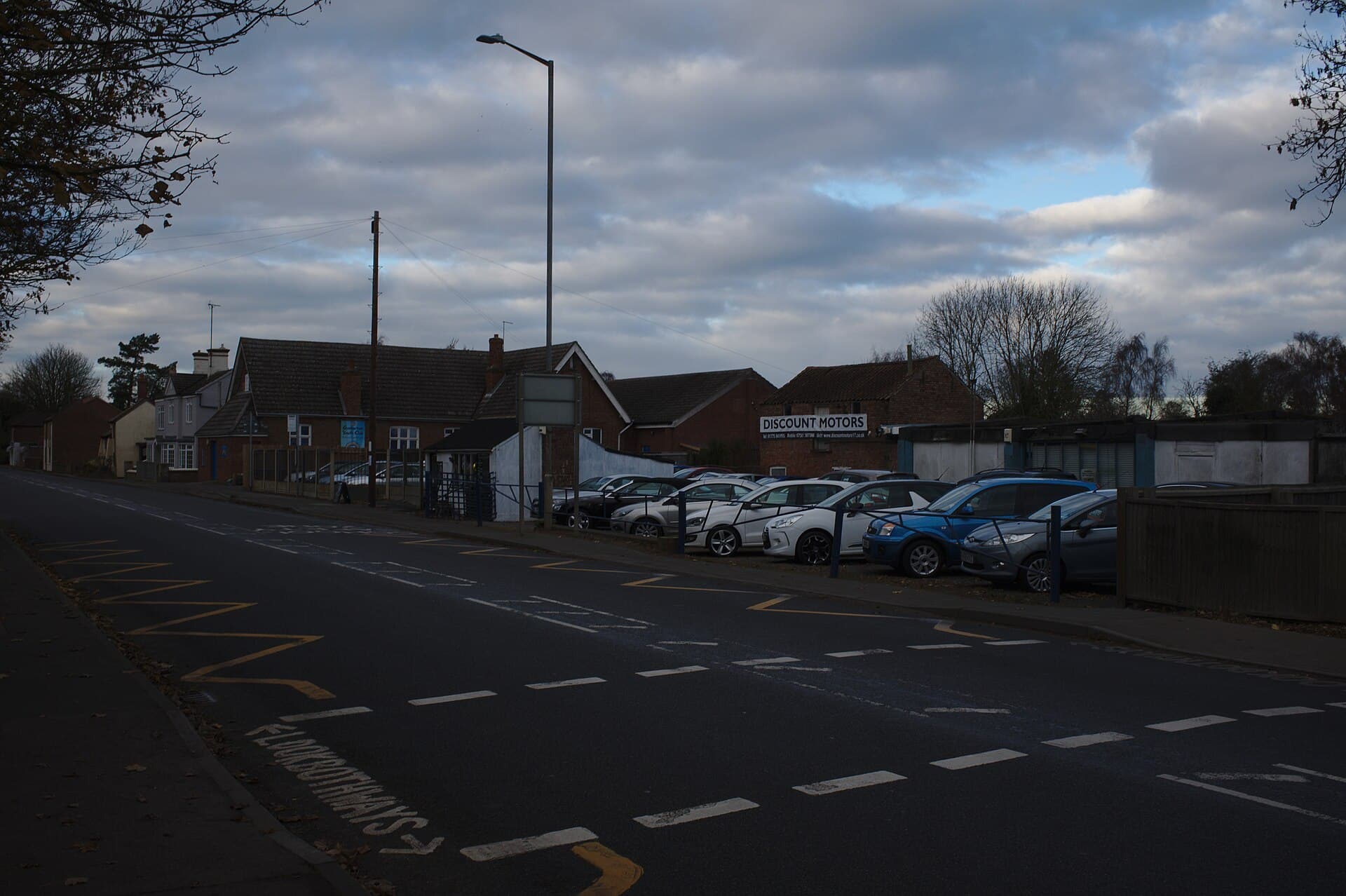
Photo: Bob Harvey. CC BY-SA 2.0. Source. See all image credits.

A used-car lot is designed around a weekly number. The figure on the windscreen is sized for a payslip, not for a contract. By the time you are standing between rows of hatchbacks — a Corolla-shaped certainty on one side, something more ambitious on the other — the conversation has usually moved to “we can get you in it today”.
Plenty Credit’s old co-operative site had a tile for buying a car that sat next to budgeting tips, not next to a countdown clock. That order is still right. A car loan is a personal loan with an asset attached, a depreciation curve, and a sales desk that is paid to finish the paperwork before you go home to think. This guide is what to check before you sign. It is general information, not a recommendation to finance a vehicle.
ASIC’s MoneySmart page on car loans is the official companion. The National Credit Code is the statute that governs most consumer car-finance contracts. The PPSR is the register that tells you whether the car is already someone else’s security.
Should you take dealer finance or go to a bank or credit union?
Dealer finance is a loan, usually written by a finance company or a bank that has a deal with the yard, and introduced by a person whose job includes selling finance. A bank, mutual or credit-union loan is the same legal family — consumer credit — with a different shopfront.
Reasons people sign at the dealer, described not endorsed:
- The car, the insurance and the loan are finished in one sitting.
- A manufacturer campaign is offering a low advertised rate on a specific model.
- The applicant has already been declined elsewhere and the introducer is still smiling.
Reasons to walk the contract home overnight:
- The introducer is not required to find you the cheapest loan in Australia. They are arranging a product they can write.
- Add-ons are easier to attach when you are already emotionally in the car.
- “We beat any quote” still requires you to have a quote, in writing, for the same amount, term and balloon.
A credit union or bank application is slower and less theatrical. It can also be cheaper, or not, depending on your file and whether the yard’s rate is a genuine subsidy. How to compare personal loans still applies: amount, term, comparison rate, fees, exit rules, security. How to apply still applies: documents, enquiries, a quote that is not the poster.
If the dealer’s finance is genuinely cheaper on a like-for-like contract, that is useful information. Like-for-like includes the add-ons. A cheap rate on a loan that has been inflated by $3,000 of extras is not a cheap rate on the car.
What is a balloon payment on a car loan?
A balloon (sometimes called a residual) is a lump sum you owe at the end of the term if you want to keep the car unencumbered. The regular repayment is calculated as if you were only paying down part of the debt. The rest waits.
Balloons make the weekly figure look like a lease even when the product is a loan. They are common in commercial hire-purchase and in consumer campaigns that want a number that fits a radio ad.
Questions that belong on the notepad, in the lot if necessary:
- What is the balloon in dollars, not only as a percentage of the glass price?
- What happens if the car is worth less than the balloon when the term ends? You still owe the balloon.
- Can you refinance the balloon, and at what sort of rate, on a then-older car?
- Are there conditions on kilometres, servicing or wear if a return option exists?
- Does the comparison rate in the ad assume the balloon? If you later refinance it, you have started a second product.
A balloon is not a gift from the dealer. It is deferred principal. Households that treat the weekly figure as “what the car costs” are the households that meet a $6,000 surprise in year five.
If you would not be able to pay the balloon in cash, you are relying on future credit. Future credit is not a plan the National Credit Code writes for you.
What insurance and add-ons get bundled into car finance?
The finance desk is where a car loan quietly becomes more expensive than the vehicle.
Common extras:
- Consumer credit insurance — sold as covering illness, unemployment or death. Sometimes useful; often expensive relative to the cover; always worth reading as a separate product, not as a tick-box.
- Gap insurance — aimed at the hole between what comprehensive insurance pays and what the loan payout is if the car is written off. The hole is larger when you borrow a lot, for a long term, on a car that depreciates fast.
- Extended warranty or mechanical protection — a second document, with exclusions, sold while you still smell the interior.
- Paint, fabric and “protection” packages — frequently poor value, occasionally non-refundable once you have driven off.
- Dealer origination or “documentation” fees on top of the lender’s establishment fee.
MoneySmart has warned, repeatedly, that add-on insurance has been sold badly in Australian car yards. That history is why you should ask for a payout figure with and without each extra, and why you should not decide in the same hour you decided on the colour.
Add-ons often sit outside the advertised comparison rate. The percentage on the board can look respectable while the financed amount has grown by thousands. Finance the car you chose, not the menu you did not.
You can usually say no. Practise the sentence before you sit down.
What should you check on a used car before you finance it?
Finance does not fix a bad car. It spreads the cost of one.
Before a lender is invited in:
- Identity of the car — build plate, VIN, engine number, registration, and whether they match the contract and the advertisement.
- History — a written-off or stolen check through a reputable service; service records; a prepurchase inspection by a mechanic who does not sell the car.
- Price against the market — not against the yard’s “drive-away” weekly.
- Existing finance — the PPSR search below is not optional on a private sale, and it is still wise on a dealer sale.
- Your own budget — registration, comprehensive insurance, servicing, tyres, fuel, and the fact that a used car will need something expensive at an inconvenient time.
A lender’s valuation is not a mechanical inspection. Approval means they think the security and your income are acceptable. It does not mean the gearbox is.
If the used-car plan is actually “I need a car and I have been declined”, pause. A high-rate loan on an old vehicle is how a transport problem becomes a default on a secured asset you also need to get to work.
What is the PPSR and why does it matter for a car loan?
The Personal Property Securities Register is a national register of security interests in personal property, including motor vehicles. A search tells you whether a credit provider (or someone else) has registered an interest in that VIN.
Why it matters:
- If you buy a car that is still security for the seller’s loan, the secured party can, in some situations, repossess it. You may be left arguing about money with a person who has already spent it.
- If you are taking a car loan, the new lender will usually register their own interest. That is expected. You should still know what was on the register before you signed.
- A dealer should be able to talk about this without theatre. A private seller who becomes offended by a PPSR conversation is giving you information.
Search on ppsr.gov.au using the VIN, not only the registration plate. Keep the search certificate. It is a cheap document compared with a missing car.
Registration of the new lender’s interest is also why you cannot simply sell a financed car at a later date without a payout and a release. Security is not a feeling. It is a row on a register.
Why weekly repayments hide the total cost
Weekly figures are a sales tool because wages are weekly or fortnightly. Total cost is the tool for deciding whether the car is affordable.
A short exercise, invented numbers, not a quote:
- Car price: $18,000
- Add-ons and fees financed: $2,400
- Amount borrowed: $20,400
- Term: six years
- Advertised weekly repayment: a number that looks like a utility bill
- Total of repayments plus a balloon: a number that looks like a different car
Stretching the term to shrink the weekly figure is how people stay in debt longer than they will stay in the car. A five-year loan on an eight-year-old vehicle is a bet that the car and your employment both last.
Ask for:
- the total amount of interest
- the total of fees
- the total you will have paid if you make every repayment and the balloon
- the payout figure after 12 months and after 24 months
If the desk cannot produce those numbers, you do not yet have a comparison. You have a weekly.
What to read in the contract before you sign
Take the contract away from the lot. Read it as you would any other credit contract — the reading guide is the general method — with extra attention to:
- the goods description and VIN
- the amount financed versus the drive-away price you were told
- each add-on as a separate line
- the balloon
- early-repayment and any break cost
- default, repossession and what happens to a shortfall
- insurance obligations (comprehensive is commonly required on a secured car loan)
- the commission or fee the introducer is paid, if disclosed
Responsible lending still applies. A car you want is not, by itself, a requirement and objective that makes an unsuitable contract suitable. What responsible lending means is the borrower-facing explainer.
If the repayment will not fit after you have left the yard, hardship help is the conversation to have with the lender, early. The sales desk is no longer in the story.
The former co-operative in the Plenty Valley used to treat a car as a household tool, not as a personality. That is the right temperature for a finance decision. Walk the rows if you like. Sign at home.
Frequently asked questions
Is dealer finance more expensive than a bank or credit union car loan?
Sometimes. Dealer finance can be convenient and occasionally subsidised by a manufacturer. It can also be packed with add-ons and a higher comparison rate. The only way to know is to compare the contract, not the yard’s weekly repayment.
What is a balloon payment on a car loan?
A balloon is a large lump sum due at the end of the term. It holds the regular repayment down and leaves you needing to refinance, pay cash, or hand the car back under whatever rules the contract allows. It is not a discount.
Why should I search the PPSR before I buy a used car?
The Personal Property Securities Register shows whether someone else has a security interest in the vehicle — typically unpaid finance. Buying a car that is still someone else’s security is how people lose both the money and the car.
Questions about this guide? Contact the Plenty Credit desk or read our editorial standards.
More in Personal loans

Personal loans vs credit cards vs buy now pay later
Three ways to pay later, three different clocks. Personal loans, credit cards and buy now pay later do not cost the same, last the same, or look the same on an Australian credit file — and stacking them is how a small gap becomes a file.
9 min read · 30 June 2026

What is a comparison rate and why it matters
A comparison rate is a legal percentage, not a marketing badge. It folds most known fees into a single figure — but the $150,000 over 25 years example on many ads is the wrong picture for a personal loan.
9 min read · 19 April 2026

How to apply for a personal loan in Australia
A personal loan application is a responsible-lending assessment, not a formality. Here is the paperwork Australian lenders usually want, why the quote is not the billboard rate, and how a credit score enters the decision.
9 min read · 11 March 2026