How to close a credit card without hurting your credit score
Pay the card to a confirmed $0, redeem rewards, then close in writing. Utilisation and the age of your file can move when a limit disappears, but a closed account still sits on the report for a time.
Published 14 August 2026 · Updated 15 October 2026 · 9 min read
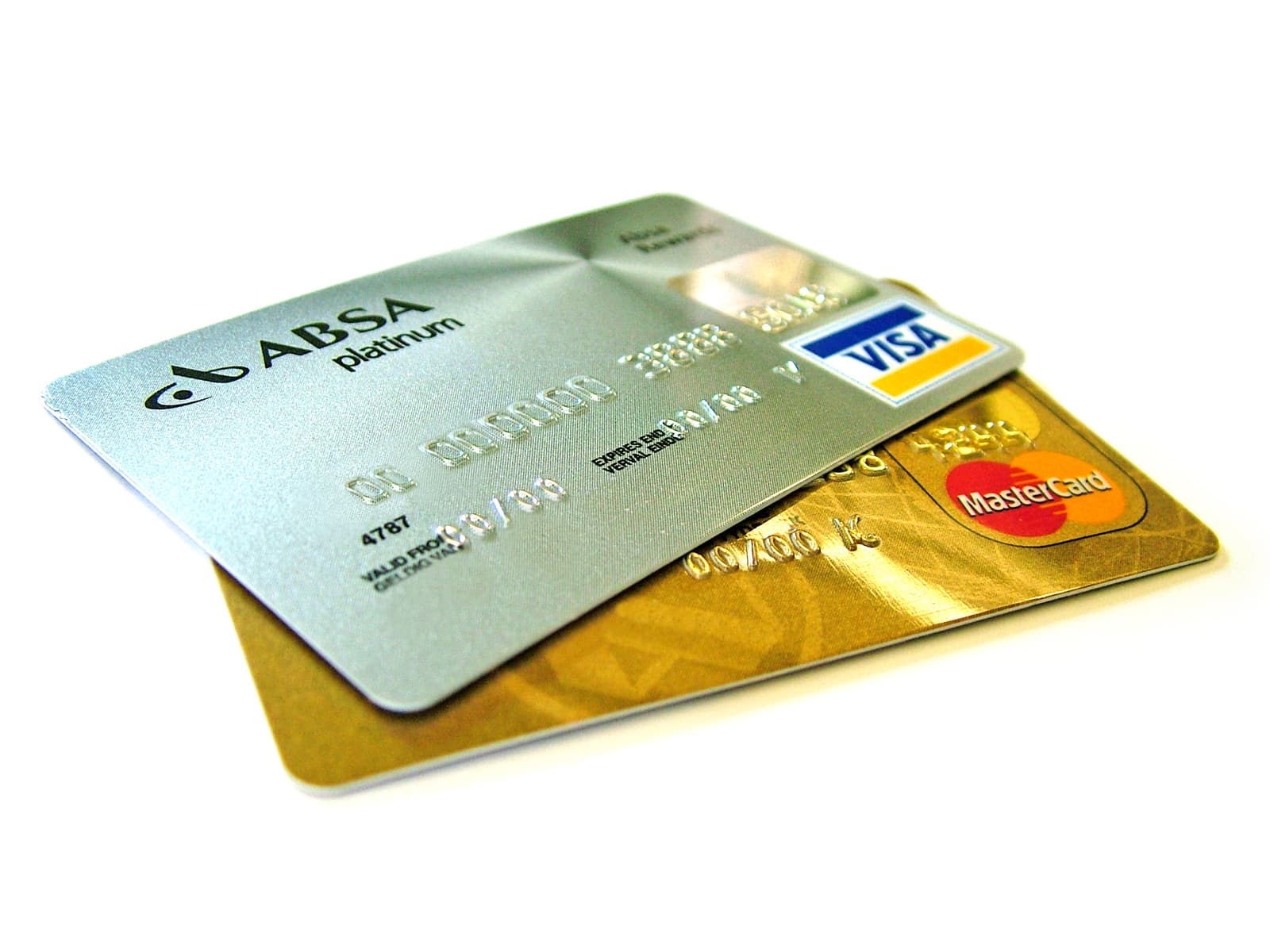
Photo: Lotus Head. CC BY-SA 2.5. Source. See all image credits.

Closing a credit card is a paperwork job with a score footnote, not a score strategy. People in Lalor have been cancelling store cards and unused bank plastics for as long as the old co-operative offered a MasterCard. The file notices two things: the limit is gone, and the account is still listed, closed, for a while.
Equifax’s consumer retention guidance is the practical calendar: details of the credit account (type, limit, open date) remain for two years after the account is closed or terminated. Repayment history has its own two-year window. The account does not vanish at the call-centre goodbye. It should, however, stop pretending to be an open facility with available credit.
This is general information about sequence and side-effects. It is not a recommendation to keep or cancel any particular card.
Does closing a credit card hurt your credit score?
It can move a bureau score. It is rarely the largest lever on the file. Missed payments, defaults and a cluster of hard enquiries do more damage than a tidy closure.
The two mechanical reasons a closure can nudge a number down:
Utilisation. Scoring models look at how much of your available revolving credit you are using. A $1,000 balance on a $10,000 limit looks different from a $1,000 balance on a $2,000 limit. Close the $8,000 unused card and, if another card still carries $1,000, utilisation on the remaining revolving credit jumps. The debt did not grow. The denominator shrank.
Age and mix. A long-standing account with on-time ticks is part of the story of the file. Closing it does not usually delete that history overnight — the closed account remains visible for the retention period — but you lose the open limit, and over time the closed account will age off. If it was your only revolving account, the file can look thinner afterwards.
Reasons a closure can be neutral or helpful in the broader sense (not as a promise about your Equifax band):
- You were paying an annual fee for a card you used as a paperweight.
- The card tempted extra spending, late nights, and the sort of revolving balance ASIC described in Report 788.
- You have just finished a balance transfer and leaving the old empty card open is how the debt reappears as new purchases.
- The issuer has started adding fees or changing terms you do not want.
Experian notes that small score movements of around ten points can be ordinary noise. Do not close a card in terror of a three-point dip, and do not keep an expensive card solely because an app drew a red arrow on utilisation. If the household is calmer without the plastic, that is a legitimate reason that does not appear on a bureau’s weight table.
A “good” score is still bureau-specific — what a good credit score means in Australia — and lenders still overlay their own view.
Should I pay the card off before I close it?
Yes. Close on a confirmed zero, not on a hope.
If you cancel with a balance:
- the account can remain open for the purpose of collecting what you owe, or be closed with an outstanding amount
- interest, including residual interest, can continue until the debt is actually cleared
- a “closed by customer” account that still owes money is a collection file, not a tidy exit
- missed payments after you thought you were done still mark repayment history
What is the safest order to close a card?
Sequence that avoids most of the mess:
- Stop using the card. Remove it from wallets, phones and recurring merchants. Recurring gym and streaming charges are how “I closed it” becomes a surprise transaction.
- Pay until the posted balance is $0. Wait through residual interest. Pay again if a few dollars appear.
- Ask the issuer, in writing or in a recorded chat you can save, to confirm the current balance is $0 and that no further interest or fees are pending.
- Redeem or forfeit rewards knowingly (see below).
- Request closure in writing. Ask for a confirmation letter or email that the account is closed, the date, and the $0.
- Keep that confirmation for two years. You will want it if Equifax or Experian still shows the account as open.
Do not cut the card and walk away. Destroying plastic is not a legal closure. The contract is closed by the issuer’s systems, not by scissors.
If you cannot pay to zero, closure is not the first conversation. Hardship is. A hardship arrangement, kept to, is how you stay recorded as meeting the agreed payments. Cancelling a card you cannot clear does not delete the debt.
How does utilisation change when I close a card?
How do I work out utilisation after a closure?
Utilisation is a ratio, not a moral quality. Simple picture:
- Cards A and B each have a $5,000 limit. You owe $1,000 on A and $0 on B. Revolving utilisation is $1,000 / $10,000 = 10%.
- Close B. Utilisation becomes $1,000 / $5,000 = 20%.
Nothing happened except the available credit in the denominator. If you instead pay A to $0 and close B, utilisation on revolving credit can be zero on remaining open cards — or you may have no open revolving accounts left, which is a different thin-file shape.
Before you close the only unused high-limit card, look at the other open cards. If they are carrying balances near their limits, the ratio will look worse after the unused limit disappears. Paying those balances down first is the utilisation conversation. Closing first is how people create a problem they then try to solve with a new application.
A lower limit on a card you keep can also change utilisation (smaller denominator). Some people ask for a limit decrease instead of a closure because they want the account to stay open for history but do not want the temptation. That is a product conversation with the issuer, not a bureau form. It has trade-offs of its own.
None of this requires a new card “to rebuild utilisation”. Opening a replacement facility is another enquiry and another annual fee. See how to choose a credit card if you are genuinely replacing a product you still need as a pay-in-full tool.
Does closing a card shorten my credit history?
The open date of a closed account typically remains on the file until the retention period ends. Australian consumer credit liability information is not the US “ten years on the report” folklore you will meet on imported blogs. Equifax’s published consumer guidance puts account details at two years after closure. When that time is up, the line drops off, and with it some of the “length of history” that account provided.
If you close a card you opened last year, you are not throwing away a decade. If you close a card you opened in 2012 and it is your oldest revolving account, you are starting a two-year countdown on that particular line. Other accounts (a home loan, a car loan, another card) still contribute their own ages.
Thin files feel this more. Someone whose only credit is one card will look different after that card is gone and aged off than someone with a home loan and a car loan still reporting. That is a reason to think, not a reason to keep paying a $395 annual fee forever as a museum exhibit for Experian.
If the file already has errors — a closed card still showing as open, a limit that never came off — that is a correction, not a reason to stay a customer. Pull both Equifax and Experian a month after closure and again at the next free-report window.
What happens to rewards, insurance and linked extras?
Rewards schemes are private contracts. Common traps:
- Points expire or are forfeited on closure. Redeem before you request cancellation, and confirm the redemption has posted.
- Companion cards, airline status credits, and “free” insurance often die with the account. If you have a trip booked that relied on complimentary insurance, read the policy before you close. The insurance is a product with conditions, not a feeling.
- Subscriptions billed to the card will fail. Update them first or you will collect dishonour fees elsewhere.
- Some issuers claw back bonus points if you close inside a promotional period. The terms you ticked six months ago still apply.
If points are the only reason the card is open, do the arithmetic against the annual fee. Dusty points are not an asset. They are a voucher with a cancellation clause.
Will the closed card still appear on my credit report?
Yes. It should appear as closed, with a close date, for the retention period. It should not continue to contribute available credit as if you could still spend. Lenders who read the report can see that you had the account and that it ended. “Closed by consumer” is ordinary. “Closed by credit provider” can mean you asked, or it can mean they cancelled it for inactivity or for cause — the report will not always narrate the kitchen-table version. If the coding looks wrong, dispute it with evidence (your closure letter).
Default listings, if any, are a separate line with a longer life (commonly five years). Closing the card does not unwind a default. Paying a default should get it marked paid; it does not rewind the date. Do not buy a repair package for a true listing.
Unauthorised cards you never opened are not “close then hope”. They are identity theft and a correction.
A calm closing sequence
Write it down as a checklist, in the same spirit as the co-operative’s old disclosure pages:
- Redemptions done, or deliberately abandoned.
- Recurring merchants moved.
- Posted balance $0, then a confirmation that residual interest will not recreate a debt.
- Closure request in writing; confirmation in writing.
- Old plastic destroyed after confirmation, not instead of it.
- Both bureau PDFs filed a month later.
- No celebratory application for a replacement card the same week unless you actually need one and have chosen it on purpose.
If the score moves a little, look at utilisation on what remains and at whether the closed account is coded correctly. Then go back to the behaviours that dominate Australian files: on-time payments, fewer curiosity applications, and a household calendar that does not rely on a minimum repayment. The magazine version of Plenty of Care is still that calendar. The plastic was only ever a tool.
Frequently asked questions
Does closing a credit card hurt your credit score in Australia?
It can, mainly if losing that limit lifts your utilisation on remaining cards, or if it was your oldest well-behaved account. The effect is often modest compared with missed payments. Closing does not wipe the account from the file immediately.
Should I pay off a credit card before I close it?
Yes. Closing with a balance left still owing is how residual interest, fees and collection activity start. Get a $0 balance confirmed in writing, then ask for closure in writing.
Will a closed credit card stay on my credit report?
Yes, for a period set by the credit-reporting rules. Consumer credit account details are commonly retained for two years after the account is closed. It should show as closed, not as if you still have the limit.
Questions about this guide? Contact the Plenty Credit desk or read our editorial standards.
More in Credit cards

Credit card balance transfers: when they help and when they don't
A 0% transfer can cheapen existing card debt if you stop spending and actually clear it before the promotional cliff. Fees, eligibility and new purchases are how the same product becomes more expensive.
9 min read · 1 July 2026

How credit card interest and interest-free periods work
Purchase rates, cash advances and residual interest are different machines. Miss a full repayment and the interest-free window can vanish, while minimums keep the balance alive for years.
10 min read · 22 March 2026

How to choose a credit card in Australia
Start with how you will repay, not with points. Interest-free days, annual fees, rewards and eligibility all change the cost. A card is a poor “credit building” project without a repayment plan.
10 min read · 28 February 2026