Buy now pay later in Australia: how the new rules work
From 10 June 2025 many BNPL products are regulated as low cost credit contracts under the National Credit Act, with modified responsible lending, hardship, AFCA and credit reporting. General information, not legal advice.
Published 12 June 2026 · Updated 18 October 2026 · 9 min read

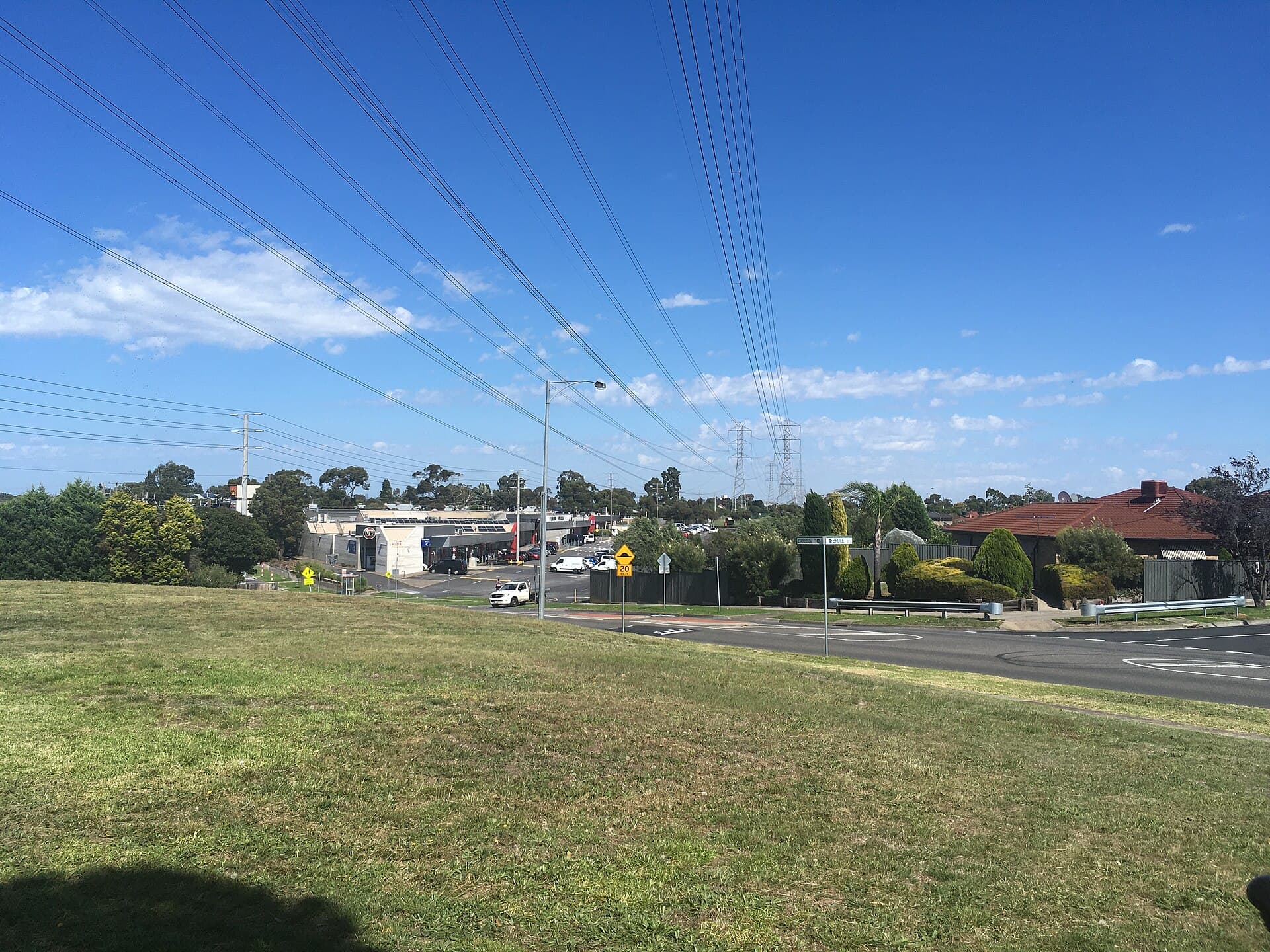
Photo: Dietmar Rabich. CC BY-SA 4.0. Source. See all image credits.

For a decade, buy now pay later sat in an awkward gap. It felt like a card at the checkout, spent like a card on a phone, and was often legally treated as something else — an unregulated or lightly regulated arrangement with instalments, late fees, and a spending cap. From 10 June 2025, a large part of that gap closed. Many BNPL products are now low cost credit contracts (LCCCs) under the National Consumer Credit Protection Act and the National Credit Code.
That sentence is doing a lot of work. It does not mean every “pay in four” button in Australia became a Commonwealth Bank MasterCard. It means licensed credit, modified responsible lending, hardship, AFCA, and a path into credit reporting. It also means this journal has to write more carefully than a press release. Plenty Credit is not a law firm. What follows is general information about the public shape of the reforms, not an opinion on your particular app.
The old Plenty Credit Co-operative never had to explain BNPL. It did have to explain that a convenient product still has a contract. That habit is the one worth keeping.
What changed for buy now pay later from 10 June 2025?
Treasury’s BNPL reforms, given effect through amendments to the national credit laws and related instruments, pulled typical BNPL arrangements into the credit licensing regime where they meet the definition of a low cost credit contract.
In practical terms, a provider offering those products is generally expected to:
- hold an Australian credit licence (or be a credit representative of a licensee)
- belong to the Australian Financial Complaints Authority
- comply with modified responsible lending rules designed for this product class
- apply National Credit Code consumer protections that previously sat more naturally on loans and cards — including hardship and, where relevant, default-notice mechanics
- give clearer information, including key facts style disclosure, rather than only a marketing page
- operate inside ASIC’s supervision, including the themes in Regulatory Guide 281 on low cost credit
If you opened a BNPL account years ago, the provider should have told you how the new rules affect that account. Some features (spending caps, late fees, identity checks) existed before 2025. The change is the legal wrapper, not the invention of instalments.
MoneySmart’s buy now pay later page is the government explainer to read beside this one. When a provider’s blog and MoneySmart disagree, prefer MoneySmart and the legislation.
Products that are not LCCCs — a store’s informal lay-by with no credit licence, a trade invoice, some wage-advance experiments — may sit outside this article’s frame. The brand name is not the test. The contract is.
What is a low cost credit contract?
LCCC is the legal bucket created so BNPL could be regulated without pretending it is a 17 per cent credit card. The idea is credit that is low-cost by design: typically no interest, or tightly constrained charges, with instalments and a relatively small limit.
The precise definition lives in the amended credit law and regulations. This journal will not recite it as if a Markdoc file were a statute book. The useful consumer version is:
- you receive goods or services now
- you pay later in instalments
- the provider is in the business of providing that arrangement
- the cost structure fits the low-cost category rather than an ordinary interest-bearing loan
Because the product is “low cost”, Parliament did not simply copy every credit-card rule. Responsible lending is modified. Some disclosures differ. Some fee rules differ. Hardship and external dispute resolution were treated as the protections people actually needed when a $1,200 clothing balance collided with a lost job.
Do not assume “low cost” means “cheap if you miss a payment”. Late fees, account restrictions, and — now more often — credit-file consequences can still arrive. Low cost is a legal category. It is not a finding that the product is harmless for your budget. How to budget when you have debt remains the household document.
If a provider still describes itself as “not credit” in 2026 advertising, treat that as a claim to check, not as a fact. ASIC has an interest in misleading conduct as well as in credit licensing.
Do BNPL providers have to do responsible lending?
Yes, in the modified form that applies to LCCCs. ASIC Regulatory Guide 281 (search ASIC’s site for RG 281) sets out how the regulator expects licensees to assess unsuitability for this product class.
The political argument was familiar. Full RG 209-style responsible lending, as applied to mortgages, would have been heavy for a $200 four-instalment purchase. No responsible lending at all had produced people with five BNPL accounts, a maxed card, and a rent debit that bounced. The compromise is a scaled assessment: still an obligation not to provide credit that is unsuitable, with processes that can be simpler than a home loan, and with more intensity as the limit or the risk goes up.
What you may notice as a customer:
- more questions about income and existing BNPL or card limits
- a check of bank-statement data or bureau data, depending on the provider and the limit
- a refused increase that would have been automatic in 2022
- a written explanation of the assessment, if you ask for it
That assessment is not personal advice to you from Plenty Credit, and it is not a guarantee the provider got it right. If a provider handed you a high limit you could never service, that can become an AFCA complaint, just as it can with a personal loan. See also responsible lending: what it means for borrowers.
A scaled check is still a check. Filling the application as if you earn more than you do is how people end up with a contract they cannot perform and a file they cannot defend.
Can you ask a BNPL provider for hardship help?
If the account is a regulated LCCC, yes — in the same broad family as other National Credit Code hardship variations. You tell the provider, in writing, that you reasonably expect to be unable to meet the instalments and that you want the contract changed. The Code’s information-and-decision process, including the familiar 21-day decision once they have what they reasonably need, is the frame to use. Details of how to write that letter sit in financial hardship: how to ask your lender for help.
Practical BNPL twists:
- several small accounts across several providers mean several letters
- a “pause” in an app may not be a Code-compliant variation unless it is documented
- late fees may still accrue unless the provider agrees otherwise — ask
- the spending function should usually be frozen while you are in hardship; if it is not, say so
The National Debt Helpline on 1800 007 007 will not be surprised if BNPL is part of the pile. It is part of many piles. MoneySmart’s financial difficulty guidance applies to this product now in a way it could only hint at before licensing.
If the provider says “we are not a lender, use the app chatbot”, ask for the hardship and complaints addresses in writing. Licensees have to have them.
Does BNPL now appear on your credit report?
It can. That is one of the quieter, larger changes.
Before the reforms, BNPL was unevenly visible. Some providers reported. Some did not. Some only appeared as an enquiry. Missed instalments might stay inside the app. From the LCCC regime, providers have a clearer path — and in many cases a commercial incentive — to participate in comprehensive credit reporting. That can mean:
- the account appears as a credit account
- on-time instalments can show as repayment history
- missed instalments can show as late repayment history
- serious overdue amounts can, if the listing rules are met, become a default listing
- applications can create enquiries
None of that is automatic in every product. Providers differ. Bureaus differ. The only way to know what your file says is to pull the free reports from Equifax and Experian and read the account list. Our companion piece, does buy now pay later affect your credit score?, is the file-level explainer.
Do not assume a perfect on-time BNPL history will lift a score the way a long-held card might. Do assume that missed BNPL, multiplied across three apps, is no longer a private argument with a chatbot.
What if you have a complaint about a BNPL provider?
Use the provider’s internal dispute resolution process first, then AFCA. That is the same IDR-then-EDR path as a card or a personal loan. AFCA is free for the individual. The firm must be a member if it is a licensed credit provider of this type.
Typical complaint themes after 10 June 2025:
- approval or limit increases that look unsuitable
- hardship requests ignored or delayed past the Code timeframes
- fees that do not match the disclosure
- default listings that skipped a required notice
- identity mix-ups
- collection conduct
How to complain to AFCA about a credit provider walks through the form, the time limits, and the difference between AFCA and a court. ASIC remains the regulator if you want to report a licensee; it will not usually umpire a single $80 late fee.
If the provider is genuinely not licensed and not in AFCA, that is a different problem — possibly a product that is not an LCCC, or a firm that is behind the law. Do not let a chatbot talk you out of checking the AFCA membership list.
What did not change?
Several things that shoppers already knew:
- instalments still come out of the same wage as rent
- using a credit card to pay BNPL can stack interest on top of a “no interest” product — a point the score article takes up
- holding five BNPL limits is still five limits, even if each looks small
- a retailer promotion (“four payments, no interest”) is not a budgeting strategy
- payday loans are still a worse fire extinguisher for a BNPL balance than hardship on the BNPL account itself
The reforms also did not turn Plenty Credit into a comparison table. We will not rank apps. We will say that a licensed product with hardship and AFCA is a safer legal environment than the pre-2025 grey zone, and that a safer legal environment does not pay the instalment for you.
Melbourne’s city-centre footpath — the one in the photograph — is full of people tapping phones at the till. The law caught up with the tap. Your job is the dull one the co-operative used to recommend for any new credit: read the key facts, know the instalment dates, keep the limit inside a budget, and write early if a date will fail. For the neighbouring guides, use the buy now, pay later hub rather than another checkout button.
Frequently asked questions
When did buy now pay later come under the National Credit Act?
The main commencement for the low cost credit contract regime was 10 June 2025. Existing providers had to be licensed, join AFCA, and apply the new conduct rules to BNPL products that meet the LCCC definition. Check your provider’s own notice for how it treats accounts opened before that date.
Do BNPL providers have to do a credit check now?
They must meet modified responsible-lending obligations for low cost credit contracts, which ASIC discusses in RG 281. That is not always the same as a full home-loan assessment, and it is not always a “hard” bureau enquiry. Read what the provider discloses when you apply.
Can I ask a BNPL provider for hardship help?
If the account is a regulated low cost credit contract, National Credit Code hardship processes generally apply. Write to the provider, keep a copy, and use AFCA if the internal process fails. Unregulated invoices are a different story.
Questions about this guide? Contact the Plenty Credit desk or read our editorial standards.
More in Buy now, pay later
Does buy now pay later affect your credit score?
BNPL can now show up as enquiries, accounts and missed-payment history, especially after the 2025 low cost credit rules. Multiple accounts, stacking, and paying BNPL with a credit card all change the picture. General information only.
9 min read · 2 August 2026